Managing taxes effectively is one of the most important aspects of personal and business financial management. While many people focus on tax returns at the end of the financial year, successful tax outcomes are often achieved through proactive planning that takes place throughout the year. This is where tax planning Adelaide services play a critical role.
Tax planning is not about avoiding tax obligations. Instead, it involves legally structuring finances, investments, and business activities to maximise available deductions, utilise tax concessions, and reduce unnecessary tax liabilities. Whether you are an individual taxpayer, investor, sole trader, or business owner, understanding how tax planning works can help you make smarter financial decisions and improve your long-term financial position.
In Adelaide’s growing economy, businesses and individuals face increasingly complex tax regulations, reporting requirements, and compliance obligations. Professional tax planning services help navigate these challenges while ensuring compliance with Australian Taxation Office (ATO) regulations.
What Is Tax Planning and Why Is It Important?
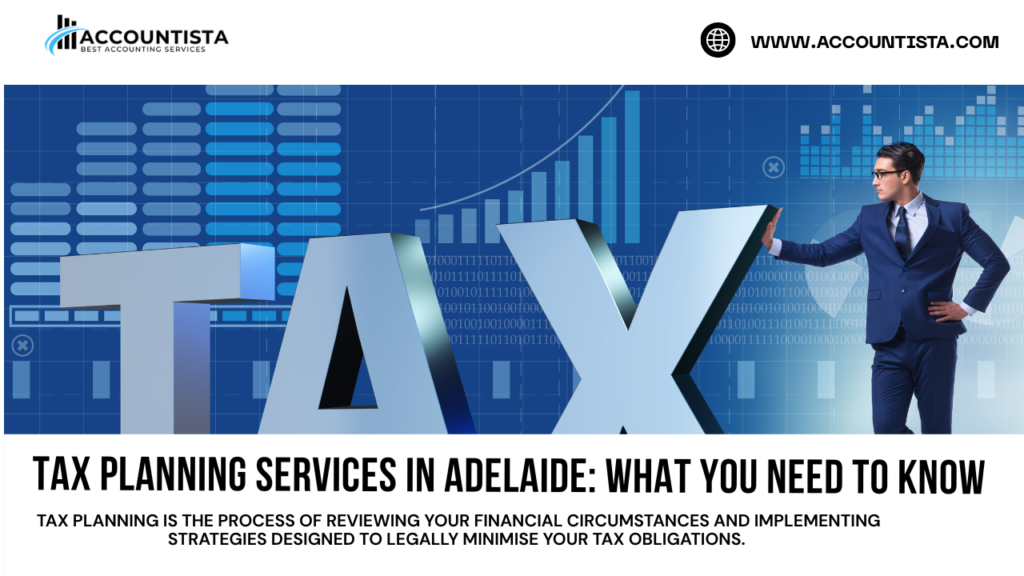
Tax planning is the process of reviewing your financial circumstances and implementing strategies designed to legally minimise your tax obligations. Unlike tax return preparation, which focuses on reporting past financial activity, tax planning takes a forward-looking approach.
Effective tax planning involves analysing:
- Current income sources
- Business revenue and expenses
- Investment portfolios
- Asset ownership structures
- Superannuation contributions
- Capital gains exposure
- Future financial goals
By reviewing these areas before the end of the financial year, taxpayers can identify opportunities to improve tax efficiency and avoid costly surprises.
Tax planning is important because taxation affects almost every financial decision. Without a structured approach, individuals and businesses may miss valuable deductions, fail to utilise available tax concessions, or create unnecessary compliance risks.
Why Adelaide Residents and Businesses Need Tax Planning
Adelaide continues to experience growth across multiple industries, including professional services, healthcare, construction, manufacturing, technology, property investment, and retail. Each sector presents unique taxation challenges and opportunities.
For example:
- Property investors must manage rental income, depreciation, and capital gains tax obligations.
- Small businesses need to navigate GST, payroll tax, company tax, and business deductions.
- Professionals may need strategies to manage higher income tax brackets.
- Investors often require guidance regarding capital gains events and investment structures.
As financial situations become more complex, tax planning becomes increasingly valuable.
Rather than reacting to tax obligations after they occur, proactive planning allows taxpayers to make informed decisions throughout the year.
Understanding the Difference Between Tax Planning and Tax Preparation
Many people assume tax planning and tax preparation are the same thing. However, they serve different purposes.
Tax Preparation
Tax preparation focuses on:
- Lodging tax returns
- Reporting income
- Claiming deductions
- Meeting compliance obligations
- Preparing financial statements
This process typically occurs after financial activities have already taken place.
Tax Planning
Tax planning focuses on:
- Future financial decisions
- Tax minimisation strategies
- Investment planning
- Business structuring
- Timing of income and expenses
- Long-term financial objectives
The greatest tax savings opportunities often arise through planning rather than preparation alone.
Key Benefits of Professional Tax Planning
Professional tax planning offers a range of benefits for individuals and businesses.
Reduced Tax Liabilities
One of the primary objectives of tax planning is identifying legal opportunities to reduce tax obligations.
This may involve:
- Maximising allowable deductions
- Utilising tax offsets
- Structuring investments effectively
- Managing capital gains exposure
- Leveraging superannuation strategies
Even small adjustments can result in significant long-term savings.
Improved Cash Flow
Unexpected tax bills can place pressure on personal finances and business operations.
Tax planning helps improve cash flow by:
- Forecasting future tax obligations
- Managing payment schedules
- Identifying tax-saving opportunities
- Reducing financial uncertainty
For businesses, stronger cash flow often translates into greater growth opportunities.
Enhanced Compliance
Australian tax legislation continues to evolve, making compliance increasingly challenging.
Professional planning ensures taxpayers:
- Meet reporting obligations
- Maintain accurate records
- Follow current regulations
- Reduce audit risks
- Avoid costly penalties
Compliance remains a critical component of any successful tax strategy.
Better Financial Decision-Making
Tax implications should be considered before making significant financial decisions.
Planning allows taxpayers to evaluate:
- Property purchases
- Business investments
- Asset sales
- Retirement strategies
- Succession planning
Understanding tax consequences before acting often leads to better outcomes.
Essential Components of a Successful Tax Strategy
A comprehensive tax strategy Adelaide approach considers multiple aspects of a taxpayer’s financial situation.
Income Management
Managing income effectively can influence overall tax outcomes.
Strategies may include:
- Timing income recognition
- Managing bonus payments
- Reviewing salary packaging opportunities
- Evaluating investment income streams
Proper planning helps ensure income is structured efficiently within current tax regulations.
Expense Planning
Many taxpayers fail to maximise legitimate deductions.
Expense planning involves reviewing:
- Business expenses
- Work-related deductions
- Professional development costs
- Vehicle expenses
- Home office deductions
Accurate documentation is essential for supporting deduction claims.
Investment Tax Planning
Investments often create complex tax considerations.
Professional planning may address:
- Capital gains tax management
- Dividend income
- Trust distributions
- Property investment deductions
- Portfolio restructuring
Strategic investment planning can significantly improve after-tax returns.
Superannuation Strategies
Superannuation remains one of Australia’s most effective tax planning tools.
Potential benefits include:
- Concessional contribution opportunities
- Retirement planning advantages
- Reduced taxable income
- Long-term wealth accumulation
Regular reviews help ensure contributions align with changing regulations and financial objectives.
How a Tax Accountant Supports Effective Planning
A qualified tax accountant Adelaide professional provides expertise that extends beyond tax return preparation.
They assist clients by:
- Analysing financial data
- Identifying tax-saving opportunities
- Monitoring legislative changes
- Developing customised strategies
- Advising on compliance requirements
- Supporting business growth decisions
Because tax legislation can be complex and frequently updated, professional guidance helps ensure strategies remain effective and compliant.
Many taxpayers discover opportunities they would otherwise overlook when working with experienced professionals.
Business Tax Planning: A Critical Tool for Growth
Tax planning is particularly important for businesses because taxation directly affects profitability, cash flow, and long-term sustainability.
Effective business tax planning Adelaide services support strategic growth while managing compliance obligations.
Business Structure Optimisation
The structure of a business can significantly influence taxation outcomes.
Common structures include:
- Sole trader
- Partnership
- Company
- Trust
Each structure offers different tax advantages and obligations.
Regular reviews ensure the chosen structure continues to meet operational and financial objectives.
Managing Business Deductions
Business owners often miss valuable deductions due to inadequate planning or record-keeping.
Potential deductible expenses may include:
- Equipment purchases
- Professional services
- Staff training
- Marketing expenses
- Technology investments
- Vehicle costs
A proactive approach helps maximise legitimate deductions.
GST and Tax Compliance Planning
GST obligations can impact cash flow and reporting requirements.
Planning helps businesses:
- Prepare for BAS lodgements
- Manage GST liabilities
- Improve reporting accuracy
- Reduce compliance risks
Strong systems and processes support ongoing compliance.
Cash Flow Forecasting
Tax obligations should be incorporated into broader financial planning.
Businesses that forecast future tax liabilities are generally better positioned to:
- Maintain liquidity
- Invest in growth opportunities
- Manage seasonal fluctuations
- Avoid financial stress
Tax planning contributes to stronger financial management overall.
Tax Planning Considerations for Property Investors
Property remains a popular investment choice in Adelaide.
However, property ownership introduces several taxation considerations.
Rental Property Deductions
Investors may be eligible to claim deductions relating to:
- Interest expenses
- Property management fees
- Maintenance costs
- Depreciation
- Insurance premiums
Proper documentation is essential to support claims.
Capital Gains Tax Planning
Selling an investment property may trigger capital gains tax obligations.
Planning ahead can help investors:
- Understand potential liabilities
- Utilise available concessions
- Time transactions strategically
- Structure investments effectively
Capital gains planning should occur before a sale takes place whenever possible.
Common Tax Planning Mistakes to Avoid
Many taxpayers unintentionally create financial disadvantages by making avoidable mistakes.
Waiting Until the End of the Financial Year
One of the most common mistakes is delaying tax planning until tax return season.
By that stage, many opportunities may no longer be available.
Poor Record-Keeping
Incomplete records can lead to:
- Missed deductions
- Compliance issues
- Increased audit risks
Maintaining organised financial documentation supports both planning and compliance.
Ignoring Legislative Changes
Tax regulations change regularly.
Failing to stay informed may result in:
- Missed opportunities
- Incorrect reporting
- Increased liabilities
Professional advice helps taxpayers adapt to regulatory updates.
Making Decisions Without Tax Advice
Major financial decisions should consider taxation implications.
Without proper guidance, taxpayers may unintentionally create larger tax liabilities than necessary.
Choosing the Right Tax Planning Professional
Selecting the right advisor is an important step toward achieving successful tax outcomes.
When evaluating tax planning services, consider:
Qualifications and Professional Credentials
Look for professionals with relevant accounting and taxation qualifications.
Industry Experience
Different industries face unique taxation challenges.
Experience within your sector can provide valuable insights and tailored recommendations.
Proactive Advisory Services
The best tax advisors focus on year-round planning rather than annual compliance alone.
Communication and Transparency
Effective advisors clearly explain strategies, risks, and potential outcomes.
Strong communication helps build confidence and informed decision-making.
Many individuals seeking comprehensive financial support also work with an experienced accountant Adelaide professional who can coordinate taxation, compliance, and broader financial planning requirements.
Likewise, growing businesses often benefit from integrated small business accounting Adelaide services that align bookkeeping, reporting, and tax planning into a unified financial management strategy.
Why Tax Planning Should Be an Ongoing Process
Tax planning is most effective when viewed as a continuous process rather than a once-a-year activity.
Financial circumstances can change due to:
- Income fluctuations
- Business expansion
- Property transactions
- Investment activity
- Regulatory updates
- Retirement planning objectives
Regular reviews allow taxpayers to adapt strategies as circumstances evolve.
An ongoing approach provides greater flexibility and often delivers better long-term outcomes than reactive planning.
The Future of Tax Planning in Adelaide
As technology continues to transform financial management, tax planning services are becoming increasingly data-driven and strategic.
Modern tax professionals utilise advanced software, forecasting tools, and financial analytics to identify opportunities and improve decision-making.
At the same time, increased regulatory scrutiny means compliance remains more important than ever.
Businesses and individuals who adopt proactive planning strategies are generally better positioned to manage change, minimise risk, and achieve their financial goals.
Conclusion
Understanding tax planning Adelaide services is essential for anyone seeking to improve financial efficiency and reduce unnecessary tax burdens. Effective tax planning goes beyond annual tax returns and focuses on creating a structured, forward-looking approach to financial management.
Whether you are an employee, investor, property owner, or business operator, proactive tax planning can help maximise deductions, improve cash flow, enhance compliance, and support long-term financial success.
By working with experienced professionals and reviewing financial strategies regularly, Adelaide taxpayers can make informed decisions that align with both current obligations and future objectives. In an increasingly complex tax environment, strategic planning remains one of the most valuable investments individuals and businesses can make for their financial future.

Olivia Brooks is a Financial Consultant at Accountista with more than 10 years of experience in corporate accounting, tax planning, and business advisory services. She has worked closely with startups, small businesses, and established companies, helping them improve financial performance, maintain compliance, and make informed strategic decisions.
Olivia specializes in tax-efficient planning, financial reporting, internal audits, and regulatory compliance. Known for her ability to simplify complex financial and tax regulations, she helps business owners gain a clear understanding of their financial position and identify opportunities for sustainable growth.
With a strong interest in accounting technology and financial innovation, Olivia combines traditional accounting expertise with modern fintech solutions to streamline processes, improve accuracy, and enhance business efficiency. Her practical, results-driven approach enables clients to reduce financial risk, optimize cash flow, and confidently navigate an ever-changing business environment.
At Accountista, Olivia is dedicated to delivering clear, actionable financial guidance that empowers businesses to achieve their goals and build long-term financial success.